Inquiry
Form loading...

10 Tips for Choosing Biological Equipment?

Selecting Biological Equipment is not a simple purchasing task. It affects data quality, worker safety, workflow speed, and long-term operating costs. A centrifuge may look impressive, yet its rotor capacity might not fit your daily samples. A compact incubator may save space, but poor temperature recovery can weaken sensitive cultures. Small details matter.

Nobel Prize-winning engineer Frances Arnold once said, “A good experiment is one that teaches you something, even if it does not give you the expected result.” Her observation also applies to equipment selection. Every instrument should support reliable learning, not merely appear advanced. Buyers need to examine accuracy, calibration records, cleaning requirements, energy use, software compatibility, and service availability. Ask difficult questions. Can the supplier provide training? Are replacement parts available locally? What happens when the display fails during a critical run?

This guide presents ten practical tips for choosing Biological Equipment with greater confidence. It considers real laboratory pressure, from crowded benches to repeated contamination checks. It also recognizes an uncomfortable truth: the cheapest option may become the most expensive mistake. However, the most expensive instrument is not automatically the best choice. That assumption deserves reflection.

Experienced teams compare specifications with actual procedures. They test usability before making a final commitment. They document the decision, including compromises and unresolved concerns. Reliable purchasing is rarely dramatic. It is careful, evidence-based, and sometimes imperfect. That is precisely why a structured evaluation can protect both scientific results and financial resources.
10 Tips for Choosing Biological Equipment?

Define the Biological Equipment’s Intended Research Purpose

Define the research purpose before comparing biological equipment. A centrifuge for cell pelleting needs different speed control, rotor capacity, and temperature stability than one used for nucleic-acid extraction. Write the workflow in practical detail: sample type, volume, throughput, sensitivity, contamination risks, and operator skill. Tip 1: Describe the result, not the device. Tip 2: Record the minimum acceptable performance. Include measurable limits, such as ±1°C temperature control or a defined detection range. Nature’s 2016 survey of 1,576 researchers found that 70% had failed to reproduce another scientist’s results. Poorly matched equipment can quietly contribute to that problem.

Check whether the equipment supports your intended method, validation plan, and facility conditions. Review calibration records, maintenance intervals, data-export functions, and user training requirements. The WHO Laboratory Biosafety Manual, fourth edition, stresses risk assessment before selecting laboratory procedures and controls. Tip 3: Test the full workflow with representative samples. Water tests may hide viscosity, foaming, or contamination issues. Tip 4: Ask for service response times and spare-part availability. A low purchase price can become expensive during downtime. I would also challenge the first specification draft; it is often too ambitious or misses routine handling details. Tip 5: Let technicians review the choice before approval. Their practical objections may reveal awkward loading, unclear software, or cleaning steps that researchers overlook.

10 Tips for Choosing Biological Equipment — Define the Intended Research Purpose

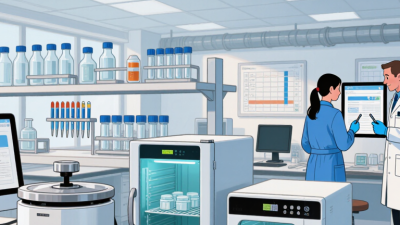
Start by identifying the biological material, workflow, and temperature requirements. The chart compares common research purposes with typical equipment operating temperatures.

Select equipment that matches the required conditions, sample volume, contamination-control level, and duration of use. For example, cryopreservation requires much lower temperatures than short-term cell culture or refrigerated sample handling.

Assess Essential Technical Specifications and Performance

10 Tips for Choosing Biological Equipment?

Technical specifications should lead the purchase, not glossy images or vague promises. Check accuracy, repeatability, operating range, and recovery time under real workloads. A 2024 market analysis projects laboratory equipment demand to grow by roughly 7% annually through 2030. That growth can encourage rushed decisions.

Ask how performance is measured. For a temperature-controlled unit, inspect uniformity across shelves, alarm response, and recovery after door opening. For a centrifuge, review speed tolerance, rotor balance, braking control, and vibration data. ISO 17025:2017 stresses measurement validity and calibration traceability. Request calibration certificates with uncertainty values, not just pass labels. Small details matter.

Data handling deserves equal attention. The WHO Laboratory Biosafety Manual, fourth edition, promotes risk-based equipment selection and documented controls. Confirm audit trails, user permissions, export formats, and backup procedures before installation. I have sometimes focused too heavily on headline capacity. That was a mistake. A larger chamber may waste energy and complicate cleaning. A 2023 sustainability report from an international laboratory association found energy efficiency and lifecycle cost were increasingly central to procurement decisions. Compare power use, consumables, maintenance intervals, and replacement-part availability. Test the equipment with representative samples when possible. Performance on a showroom demo can be misleading.

Verify Safety, Compliance, and Laboratory Compatibility

10 Tips for Choosing Biological Equipment

Verify Safety, Compliance, and Laboratory Compatibility

Tip: Start with a documented risk assessment. Identify exposure routes, moving parts, heat sources, pressure points, and spill risks. Check emergency stops, protective barriers, alarms, and cleaning access. A tidy specification sheet can still hide practical hazards. Ask for inspection records, operating instructions, and maintenance requirements. Confirm that staff can understand the controls without guesswork.

Tip: Verify compliance before comparing prices. Request relevant certificates, test reports, calibration records, and quality documentation. Requirements may differ by country, laboratory type, and application. Confirm that the equipment supports approved procedures and internal safety policies. Do not treat a certificate as permanent proof. It may need renewal, review, or independent verification.

Tip: Test laboratory compatibility in real conditions. Measure doorways, bench depth, electrical capacity, ventilation, temperature, and available drainage. Check whether materials resist the disinfectants used in your facility. Consider noise, vibration, and cleaning time. Speak with technicians and daily users, not only procurement staff. Their concerns are often less polished, but more useful. A short trial can reveal awkward access or unstable readings. No checklist is perfect. Revisit the decision after installation, because small workflow problems can become routine safety risks.

Compare Costs, Maintenance Needs, and Supplier Support

Choosing biological equipment requires more than comparing purchase prices. I check total cost of ownership over five years. Include installation, calibration, consumables, software, energy, and disposal.

The U.S. Department of Energy reports that laboratory buildings can use five to ten times more energy per square foot than offices. A freezer with a low purchase price may still increase utility bills sharply. Ask for measured operating data, not optimistic estimates.

Ten practical checks matter:

price capacity energy use warranty maintenance intervals spare parts calibration training response time documentation

Maintenance needs should match the laboratory’s real workload. Open the service schedule and identify weekly, quarterly, and annual tasks. A temperature-controlled unit may need door-seal checks, alarm testing, and sensor verification.

ISO/IEC 17025 emphasizes competent calibration and traceable measurement results, which affects both cost and credibility. Request sample service records and a written list of excluded labor. Small exclusions can become expensive surprises.

Supplier support is part of the equipment. Confirm response targets, local technical coverage, parts availability, remote diagnostics, and escalation procedures. The World Health Organization’s Laboratory Quality Management System handbook links reliable equipment control with accurate, reproducible testing.

Ask whether training includes hands-on fault checks, not only a presentation. I once underestimated the value of a clear maintenance log. That was a mistake.

Compare at least three quotes using the same five-year assumptions, then challenge every unclear fee. Availability matters, but unsupported availability is not reliability.

Evaluate Usability, Scalability, and Future Research Requirements

10 Tips for Choosing Biological Equipment

Evaluate usability before comparing specifications. Ask a technician to complete a routine workflow with gloved hands. Clear controls, readable displays, and easy cleaning reduce avoidable errors. The WHO Laboratory Biosafety Manual, fourth edition, emphasizes risk-based procedures, maintenance, and user competence. Equipment should support these practices, not complicate them. Check sample loading, software navigation, calibration access, noise, and operator training time. Small frustrations become expensive at scale. I have seen teams overvalue advanced functions that were rarely used. That mistake deserves honest review.

Test scalability with realistic workloads. Compare throughput, temperature stability, data storage, service intervals, and power needs. The OECD Main Science and Technology Indicators report shows that global research and development spending reached about 1.7% of GDP in recent years. Research capacity is expanding, so a system purchased today may face heavier demand tomorrow. Ask whether modules can be added without replacing the core platform. Confirm compatibility with existing data systems and common laboratory formats. Avoid vague promises. Request documented performance under continuous use.

Future research needs require disciplined imagination. List likely methods, sample types, automation levels, and compliance requirements for the next three to five years. The UNESCO Science Report 2021 reported that global R&D investment increased substantially during the previous decade. That growth can change project priorities quickly. Choose flexible accessories, open export options, and repairable components where practical. Review total ownership cost, consumables, validation time, and staff turnover. A pilot test is valuable. Still, no pilot predicts every failure. Build a review point into the purchasing plan, and record which assumptions proved wrong.

10 Tips for Choosing Biological Equipment: Evaluate Usability, Scalability, and Future Research Requirements
No. Selection Tip What to Evaluate Practical Acceptance Criteria Scalability Consideration Future Research Requirement Evidence to Request
1 Define the intended application Identify the biological workflow, sample type, throughput, environmental conditions, and required level of containment. All critical use cases are documented, including sample volume, operating temperature, processing time, and contamination risks. Confirm capacity matches current demand without requiring immediate replacement. Allow for additional assay types, sample matrices, or protocol changes where practical. Application requirements document, workflow map, and representative sample testing.
2 Prioritize usability and ergonomics Assess interface clarity, loading height, access to consumables, cleaning steps, and the number of manual interventions. Routine operators can complete essential tasks using clear instructions and without unnecessary handling or awkward posture. Look for modular accessories and workflows that can be operated consistently by multiple users. Check whether software, controls, and user training can support more complex future protocols. Hands-on demonstration, usability checklist, training time, and operator feedback.
3 Verify performance specifications Review accuracy, precision, repeatability, temperature uniformity, speed, sensitivity, or other parameters relevant to the application. Performance is tested against defined acceptance limits using representative operating conditions. Performance should remain within specification when workload, batch size, or run frequency increases. Determine whether higher sensitivity, broader dynamic range, or additional measurement modes may later be needed. Technical specifications, validation data, calibration records, and independent test results where available.
4 Examine contamination control Evaluate closed-system features, cleanability, disposable pathways, airflow design, sterilization compatibility, and carryover risk. Contact surfaces are accessible for cleaning, and the workflow separates clean, active, and waste-handling steps. Higher throughput must not compromise segregation, cleaning frequency, or operator safety. Consider future work with low-biomass, amplified, infectious, or cross-sensitive samples. Cleaning and decontamination procedures, carryover studies, biosafety assessment, and surface-material information.
5 Assess throughput and bottlenecks Measure samples per run, run duration, setup time, turnaround time, and the time required for loading, unloading, and maintenance. Calculate effective throughput as completed samples per unit of time, not only the nominal capacity. Identify whether capacity can be expanded through additional modules, parallel units, automation, or workflow redesign. Reserve capacity for anticipated studies, repeat testing, controls, and method-development work. Time-and-motion study, throughput calculation, queue analysis, and peak-demand scenario.
6 Check interoperability and data integrity Review file formats, audit trails, user permissions, instrument connectivity, laboratory information systems, and export options. Data are traceable from sample identification through result review, with controlled access and documented changes. Prefer systems that support standard interfaces, scalable storage, and integration with future laboratory platforms. Confirm compatibility with automated analysis, electronic records, image data, or multi-omics workflows if relevant. Data-flow diagram, sample audit trail, interface documentation, export test, and cybersecurity review.
7 Evaluate maintenance and serviceability Consider preventive-maintenance intervals, calibration needs, consumable replacement, downtime, and access to critical components. Routine maintenance can be performed safely, and service requirements are clearly documented. Maintenance workload should remain manageable as the number of instruments or operating hours increases. Check whether parts, software updates, and technical support will remain available throughout the planned lifecycle. Maintenance schedule, spare-parts plan, service response terms, calibration procedure, and downtime history.
8 Calculate total cost of ownership Include purchase cost, installation, validation, training, consumables, utilities, software, service, waste disposal, and replacement parts. Compare cost per usable sample or completed experiment, rather than purchase price alone. Model costs at current, medium, and high utilization levels to identify the most economical capacity range. Include potential costs for new assays, additional modules, regulatory changes, and data-storage growth. Five-year cost model, consumables list, utility requirements, warranty terms, and upgrade pricing structure.
9 Confirm safety and compliance needs Review electrical safety, biological containment, chemical compatibility, waste handling, noise, heat, and applicable laboratory procedures. Equipment can be operated within the facility’s risk assessment, ventilation, power, space, and emergency-control requirements. Expansion plans must account for additional heat output, electrical load, ventilation, waste volume, and operator access. Consider whether future work may require higher containment, additional monitoring, or formal validation. Risk assessment, safety documentation, installation requirements, compliance records, and site-acceptance testing.
10 Plan for validation and future flexibility Assess installation qualification, operational qualification, performance qualification, method transfer, and change-control requirements. Critical functions can be documented, tested, and reproduced by trained personnel under defined conditions. Choose upgrade paths, modular configurations, and open standards where they reduce the risk of technology lock-in. Review compatibility with emerging assays, automation, alternative sample formats, and evolving research questions. Validation protocol, acceptance-test plan, change-control process, upgrade roadmap, and method-transfer results.