How to Choose a Cold Storage Tank in 2026?
Choosing a Cold Storage Tank in 2026 requires more than comparing capacity and purchase prices. The right vessel must match the stored product, temperature range, operating schedule, and available site space. A tank holding chilled water needs different protection from one storing dairy ingredients, pharmaceuticals, or temperature-sensitive chemicals. The details matter.
In practical evaluations, start with the product temperature and required holding time. Then examine insulation thickness, internal lining, corrosion resistance, cleaning access, and sensor placement. A poorly positioned probe can show a safe reading while warmer liquid remains near the tank wall. That small error can affect quality, energy use, and maintenance decisions. Review welding records, pressure ratings, surface finishes, and supplier testing before approval. Reliable manufacturers should explain their materials and provide clear documentation.
Energy performance deserves close attention in 2026. Compare heat gain, refrigeration demand, standby losses, and the tank’s expected service life. A cheaper tank may become expensive after years of compressor operation. However, maximum insulation is not always the best answer. It can increase cost, complicate repairs, or provide little benefit in a mild climate. No checklist is perfect. Site conditions change. Operators make mistakes. That is why selection should include realistic failure scenarios, routine inspections, alarm testing, and emergency procedures. Speak with qualified engineers and local inspectors before installation. Their practical feedback may challenge an attractive specification, which is often useful. The best Cold Storage Tank is not simply the largest or newest model. It is the one that safely supports your process, people, budget, and future operating needs.
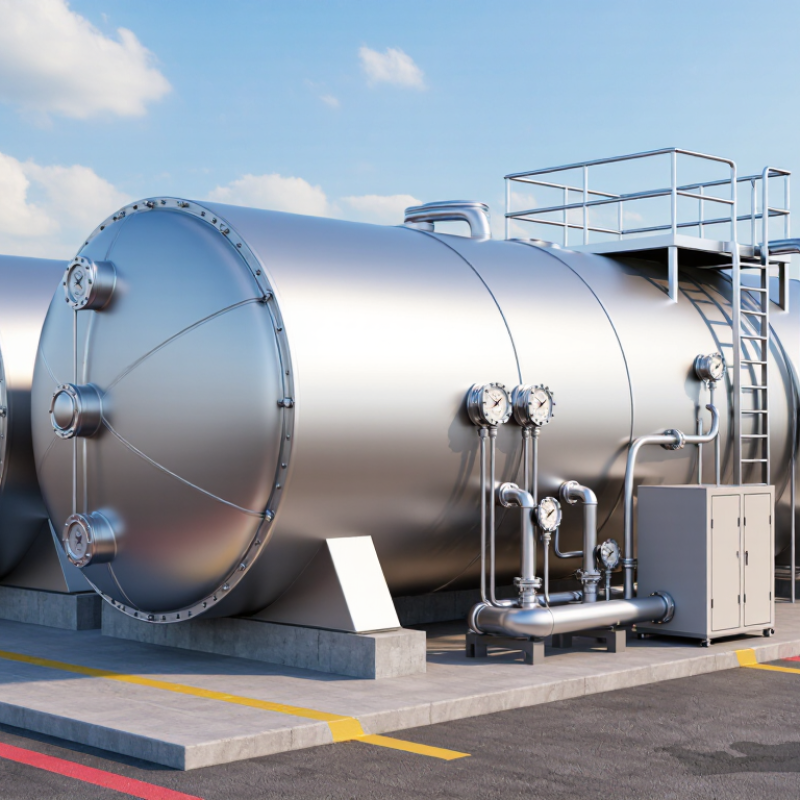
Define Your Cold Storage Requirements and Operating Conditions
Choosing a cold storage tank starts with measured demand, not a catalog dimension. Record product type, daily throughput, peak inventory, and required holding time. Include cleaning frequency and future expansion. A tank for chilled water differs from one for food ingredients or thermal fluids. Define the target temperature and acceptable variation. Write both in numbers. “Cold” is not a specification.
Check ambient temperature, humidity, altitude, and available floor loading. Measure the installation route, service clearance, drainage, and power supply. Calculate heat gain from walls, piping, mixers, lights, and frequent access. Ask how quickly the tank must pull down after loading. A reliable design also considers agitation, insulation thickness, corrosion exposure, and emergency alarms. Operators often underestimate cleaning downtime. I have seen capacity plans fail because usable volume was confused with total volume. That mistake is expensive, but easy to prevent. Confirm materials, pressure limits, sanitation needs, and applicable standards with qualified engineers.
Tips: Keep a one-page operating profile. Include normal, minimum, and worst-case conditions. Test the warmest expected day, not only the design average. Leave headspace for expansion and safe mixing. Review sensor locations; a good tank can still report misleading temperatures. Recheck assumptions after one operating season. Real data may challenge the original plan. That is useful.
Compare Cold Storage Tank Types and Insulation Systems
Choosing a cold storage tank in 2026 requires comparing storage media and insulation, not just tank volume. The IEA’s The Future of Cooling report projects global cooling energy demand could more than triple by 2050. That pressure makes efficient thermal storage increasingly practical.
Chilled-water tanks suit moderate temperature shifts and offer simple pumping control. Ice storage tanks deliver greater cooling density, but they need refrigeration systems that can freeze water overnight.
Phase-change material tanks can operate within narrower temperature ranges. They also cost more and require careful compatibility testing.
I would not choose PCM technology without reviewing real cycling data.
Insulation often determines long-term performance. Rigid polyurethane and polyisocyanurate commonly provide thermal conductivities near 0.020–0.028 W/m·K, based on EN 13165 product ranges. Mineral wool usually performs closer to 0.035–0.045 W/m·K. It may need greater thickness.
ASHRAE Handbook guidance stresses continuous vapor control around cold surfaces. A small gap near a pipe support can create condensation, ice, and hidden heat gain.
The U.S. Department of Energy’s thermal energy storage guidance also emphasizes load shifting and peak-demand reduction. Exact savings still depend on tariffs, climate, cycling hours, and controls. That part is easy to underestimate.
Verify Safety Standards, Site Conditions, and Installation Needs
How to Choose a Cold Storage Tank in 2026?
A cold storage tank should match the stored medium, operating temperature, pressure, and expected service life. Verify recognized safety standards before comparing price or capacity. Request material certificates, pressure-test records, welding inspections, and relief-device details. Check whether the design supports vacuum protection during rapid cooling or unloading. Do not rely on a product label alone.
Site conditions can change the correct tank choice. Measure floor strength, drainage, access width, ventilation, and available maintenance clearance. The foundation must remain level under the full operating load. Consider wind, seismic exposure, flooding, and nearby heat sources. Leave space around valves and inspection openings. Small gaps become difficult repairs later.
Installation needs
Installation needs should be reviewed with the tank supplier, site engineer, and qualified installers. Confirm lifting points, delivery routes, anchor locations, piping flexibility, insulation joints, and electrical requirements. Cold surfaces may cause condensation, slippery floors, or hidden corrosion. Plan leak detection and emergency isolation near operating areas. During commissioning, record pressure, temperature, alarms, and relief-device performance. I have seen projects treat commissioning as paperwork. That mistake can hide unstable readings. Recheck everything after the first full cooling cycle.
Compare Lifecycle Costs, Maintenance, and Supplier Support
How to Choose a Cold Storage Tank in 2026?
A cold storage tank should be judged by its full lifecycle cost, not its purchase price. Energy use, insulation performance, water treatment, repairs, and disposal can change the final budget. In my project reviews, low-cost tanks sometimes required frequent valve replacements and extra monitoring. My first estimate was too optimistic. I ignored downtime during cleaning and inspection. Ask suppliers for five-year energy projections, spare-part prices, warranty terms, and expected service intervals. Request assumptions in writing.
Maintenance details reveal practical quality. Check whether technicians can access valves, sensors, insulation joints, and internal coatings safely. A crowded service area increases labor time. It also encourages rushed inspections. Look for corrosion-resistant materials suited to your fluid and local climate. Verify pressure ratings through independent documentation, not sales claims alone. A reliable supplier should provide installation guidance, commissioning records, maintenance schedules, and responsive technical support. Test the support process before purchasing. Send a technical question and measure the response.
Tips: Compare total ownership costs using your actual operating hours. Ask for references from similar facilities. Include cleaning water, electricity, labor, and emergency repairs. Confirm spare-part availability for at least ten years. Leave room for uncertainty. Conditions change.
How to Choose a Cold Storage Tank in 2026?
15-year lifecycle cost comparison for a 500 m³ refrigerated-liquid storage tank. Values are planning benchmarks in USD thousands and include acquisition, installation, energy losses, routine maintenance, and supplier-support risk.
Key insight: The lowest purchase price does not always produce the lowest total cost. Higher-efficiency insulation can reduce energy losses, while preventive maintenance and responsive supplier support help limit long-term operating risk.