Inquiry
Form loading...
Global buyers comparing Ammonium Tower suppliers in 2026 need more than a polished brochure. They need equipment matched to process conditions, production targets, materials, and local service capacity. The USGS Mineral Commodity Summaries 2025 estimates global ammonia production at about 150 million metric tons in 2024. That scale makes reliability and maintainability practical procurement concerns, not minor specification details. The International Energy Agency’s Ammonia Technology Roadmap also highlights ammonia’s substantial energy and emissions footprint. Tower design, operating efficiency, and integration therefore deserve close technical review.
This guide introduces supplier-selection factors, including documented project experience, engineering support, inspection records, delivery scope, and access to replacement parts. Buyers should ask for process references and drawings, then check whether proposed materials suit the actual operating environment. A low quoted price can hide gaps in commissioning or after-sales support. Sometimes, the paperwork looks stronger than the equipment history. That matters. Supplier comparisons also require care because “Ammonium Tower” can describe different equipment across applications and markets. There is no single ranking that fits every plant. Treat this overview as a starting point, and verify each claim with technical documents and direct discussions.
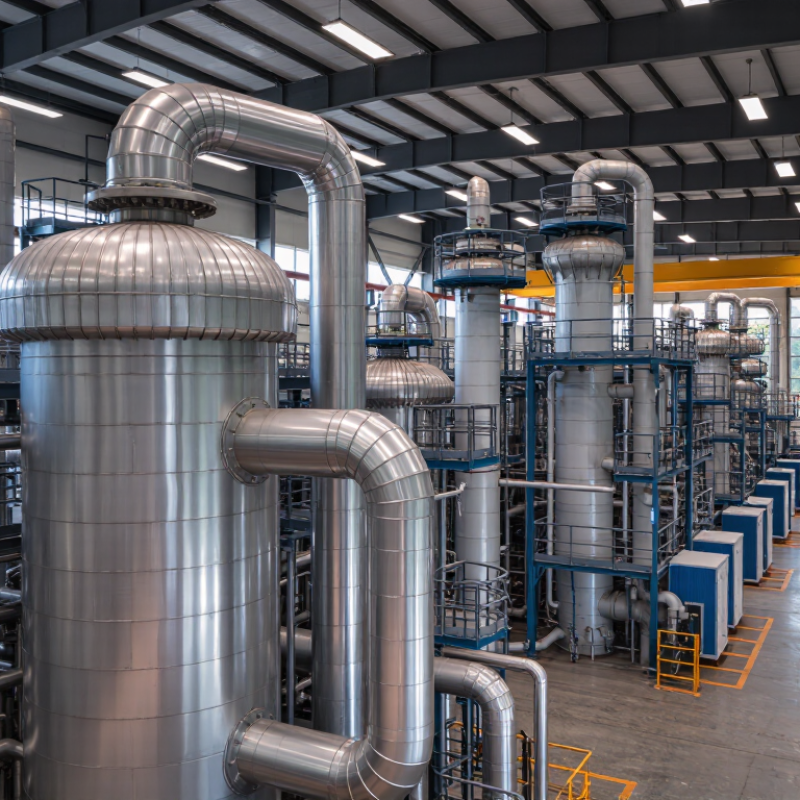
An ammonium tower usually means a prilling tower used to make solid ammonium nitrate fertilizer. Concentrated molten solution enters at the top and passes through a rotating bucket or spray device. It breaks into small droplets. Cooling air rises through the tower as the droplets fall, cooling and solidifying them into prills. The idea is simple. The engineering is not. Droplet size, melt concentration, airflow, and humidity all affect product size and moisture. The European Commission’s 2007 Large Volume Inorganic Chemicals BREF describes prilling as a key ammonium nitrate production route and identifies tower emissions as an issue requiring process control.
For global buyers, tower capacity alone is a poor measure of performance. Ask for evidence on product-size distribution, dust collection, corrosion-resistant materials, and operating data under comparable conditions. The International Fertilizer Association’s 2024 outlook estimated global fertilizer consumption at about 192.5 million tonnes of nutrients in 2023/24, showing the scale of the market; it does not predict demand for any single tower. A site-specific review matters. Tower height and climate can change cooling behavior, while maintenance access affects real availability. One uncomfortable detail: vendor guarantees may rely on ideal feed and weather assumptions. Request the test conditions, measurement methods, and limits behind every quoted figure.
| Topic | What It Means | How It Works or What to Check |
|---|---|---|
| Ammonium Tower Basics | ||
| Definition | An “ammonium tower” is a broad, sometimes informal term for a gas–liquid contact tower used in ammonia absorption or ammonium-salt production. | Confirm the intended process with the supplier. Tower design differs depending on whether the objective is ammonia recovery, gas scrubbing, or salt-solution production. |
| Core operating principle | Gas and liquid contact inside the tower, allowing ammonia to transfer from the gas phase into the liquid phase. | In a common countercurrent arrangement, gas flows upward while liquid flows downward. Packing or trays increase the contact between the phases. |
| Water absorption | Ammonia dissolves in water and establishes an equilibrium between dissolved ammonia and ammonium and hydroxide ions. | Absorption performance depends on factors such as gas and liquid flow rates, temperature, pressure, concentration, and contact area. |
| Acid absorption | Ammonia can react with an acid to form an ammonium salt. For example, sulfuric acid can produce ammonium sulfate, while hydrochloric acid can produce ammonium chloride. | Acid concentration, stoichiometry, heat release, product concentration, and corrosion compatibility must be considered in process design. |
| Packed tower | A tower containing random or structured packing that provides surface area for gas–liquid contact. | Ask about packing type, liquid distribution, pressure drop, fouling risk, and access for inspection and cleaning. |
| Tray tower | A tower with internal trays that stage gas–liquid contact at successive levels. | Tray selection depends on capacity, turndown, pressure drop, foaming tendency, and the properties of the process streams. |
| Heat and temperature control | Ammonia absorption and acid–base reactions release heat, which can affect equilibrium and operating performance. | Determine whether the design needs liquid cooling, an external heat exchanger, temperature monitoring, or other heat-management provisions. |
| Gas outlet protection | A mist eliminator can reduce liquid-droplet carryover in the treated gas leaving the tower. | Specify the required outlet condition and confirm that the mist eliminator can be inspected, cleaned, and replaced. |
| Supplier and Project Evaluation | ||
| Process design basis | The design basis defines the feed, operating envelope, product target, and required treatment performance. | Provide gas composition and flow, liquid composition and flow, operating pressure and temperature, contaminants, and target outlet or product specifications. |
| Materials of construction | Material suitability depends on the process chemistry and operating conditions. | Review corrosion data for the actual concentrations, temperatures, contaminants, and wet or dry service. Request material specifications for the shell, internals, piping, and seals. |
| Hydraulic design | Tower diameter and internals affect capacity, pressure drop, liquid distribution, and the risk of flooding or poor contact. | Request the supplier’s design calculations and stated operating range. Avoid selecting equipment on vessel dimensions alone. |
| Instrumentation and controls | Instrumentation may monitor variables such as pressure, temperature, liquid level, and flow. | Agree on measurement points, control-valve scope, alarm requirements, control-system interfaces, and the project’s electrical and safety standards. |
| Safety and emissions | Ammonia is hazardous to inhale, and process systems need appropriate containment and safeguards. | Review applicable local codes, hazard assessments, relief and vent arrangements, leak detection, emergency procedures, and emissions requirements with qualified engineers. |
| Documentation and delivery scope | A tower package may include the vessel, internals, instruments, drawings, and technical documentation. | Clarify battery limits, applicable design codes, inspection and testing, certificates, installation support, commissioning, spare parts, and delivery terms in the purchase specification. |
| Supplier comparison | Supplier suitability should be evaluated against the project’s technical and commercial requirements rather than an unverified ranking. | Compare relevant process experience, design substantiation, quality procedures, references for similar duties, service support, schedule, guarantees, and total installed cost. |
| Important design note | There is no single standard operating range or universal tower configuration for all ammonium services. Final sizing, materials, and performance guarantees require project-specific process data and engineering review. | |