Top Chemical Storage Tank Types for Safe and Efficient Storage Solutions?
Chemical storage tanks are crucial for industries handling various substances. Selecting the right type ensures safety and efficiency. These tanks come in different materials and designs, each catering to specific chemical properties. For instance, fiberglass tanks resist corrosion, while steel tanks offer robust durability.
However, the choice of tank is not straightforward. Factors such as temperature, pressure, and chemical interactions play a significant role. Improper selection can lead to leaks or contamination. It's essential to conduct thorough research. Understanding the regulations surrounding chemical storage is also fundamental.
Moreover, advancements in technology are transforming storage solutions. Innovations like AI can streamline processes and improve safety measures. Yet, reliance on technology should be balanced with human oversight. Reflecting on these factors is vital for optimizing chemical storage tank solutions.

Overview of Chemical Storage Tanks and Their Importance
Chemical storage tanks play a crucial role in various industries. They are essential for storing hazardous and non-hazardous liquids. According to research, improper storage can lead to severe consequences. Spillages and leaks can result in environmental damage and financial losses. The importance of proper tank selection cannot be overstated.
Different types of chemical storage tanks exist. For instance, above-ground tanks are commonly used due to their accessibility. Their design allows for easy inspection and maintenance. On the other hand, underground tanks provide discreet storage, reducing surface hazards. A report from the American Institute of Chemical Engineers indicates that nearly 40% of chemical leaks occur due to inadequate tank management protocols. Effective monitoring systems can vastly improve safety.
Industry practices often highlight the need for regular training and updates. Many companies still neglect these aspects. They assume safety is guaranteed once tanks are installed. However, continuous education on handling and emergency response is critical. Ultimately, chemical storage is complex and requires careful consideration.
Top Chemical Storage Tank Types
This bar chart illustrates the various types of chemical storage tanks and their number of applications in the industry. The data highlights the prevalence of vertical tanks, followed by horizontal tanks, showcasing the diversity of storage solutions available for safe and efficient chemical storage.
Common Types of Chemical Storage Tanks and Their Features
Chemical storage tanks play a crucial role in ensuring safe and efficient storage solutions. There are various types of chemical storage tanks. Each type comes with unique features tailored to specific needs. For instance,
above-ground storage tanks are prevalent for their easy access and visibility. According to a recent report by the Chemical Safety Board,
over 70% of industrial accidents occur due to improper tank storage.
Another common type is the underground storage tank. These tanks help minimize environmental risks. They are less prone to corrosion. Yet, they come with challenges, such as the complex installation process and the need for regular inspections.
Research shows that about 30% of underground tanks leak over time, impacting groundwater safety significantly.
Polyethylene tanks are gaining traction due to their lightweight and corrosion-resistant properties. Their flexibility allows for various chemical types. However, they can be susceptible to UV degradation. This requires careful placement and protection measures. In a world where safety standards are critical, the choice of a chemical storage tank should be taken seriously.
It is essential to weigh the pros and cons of each type, considering both safety and efficiency in storage solutions.
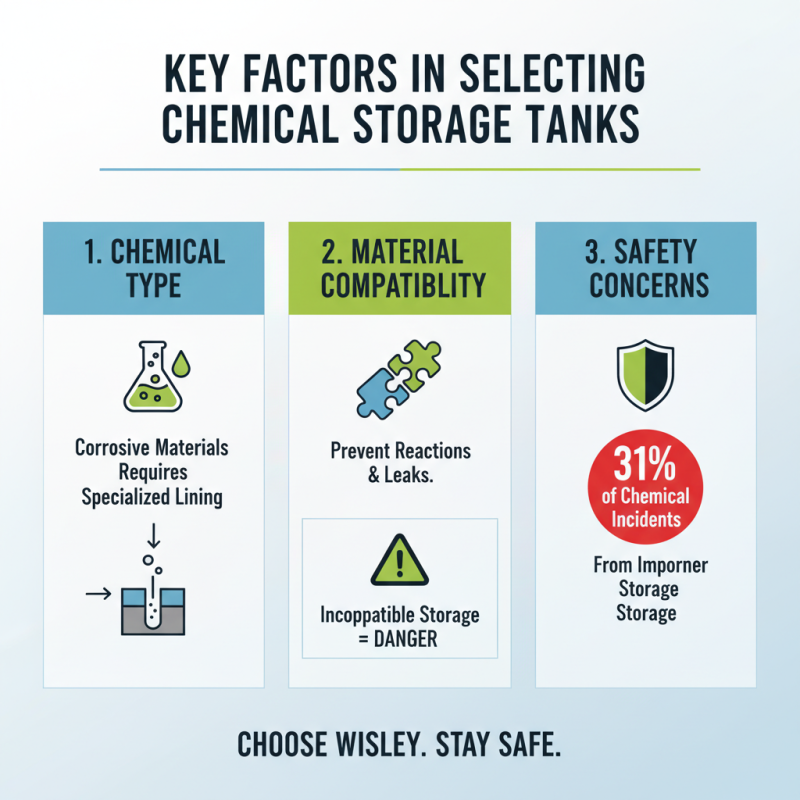
Key Factors in Selecting Chemical Storage Tanks
When selecting chemical storage tanks, understanding key factors is crucial. The type of chemical stored significantly affects tank selection. For instance, corrosive materials may require specialized lining. Reports indicate that about 31% of chemical incidents stem from improper storage methods. That's alarming.
Next, consider the tank material. Steel and polyethylene are common choices. Steel offers strength but may corrode over time. Polyethylene resists many chemicals but may not withstand extreme temperatures. An interesting statistic shows that 27% of storage failures are due to material incompatibility.
Tank size also matters. Choosing the right size can prevent overflow and contamination. According to industry data, 22% of spills are linked to overfilled tanks. Inadequate safety features can be a ticking time bomb. Facilities often overlook safety regulations, leading to potential hazards. Reflect on your storage needs. Evaluating all these factors can enhance safety and efficiency in chemical storage.
Safety Standards and Regulations for Chemical Storage Tanks
When it comes to chemical storage, safety standards are crucial. Tanks must meet specific guidelines to ensure safe handling. These regulations dictate tank materials, design, and maintenance protocols. For example, double-walled tanks are often recommended. They provide an extra layer of protection against leaks and spills.
Regular inspections are necessary. Inspections help identify potential weaknesses that could lead to accidents. Often, facilities neglect this process due to time constraints. Ignoring maintenance can result in severe consequences, like chemical leaks. It's important to promote a culture of safety that emphasizes the need for strict adherence to regulations.
Understanding local regulations is equally vital. Different regions have unique requirements. A facility may comply with national standards but still overlook local rules. This oversight can create dangerous situations. Awareness and education about local compliance can prevent catastrophes and enhance overall safety. Continuous training for employees also plays a significant role in maintaining safety standards.
Best Practices for Maintaining Chemical Storage Tanks
Maintaining chemical storage tanks requires strict adherence to best practices. Regular inspections are crucial. According to a recent industry report, nearly 30% of tank failures stem from poor maintenance. Issues like corrosion can go unnoticed. When rust forms, it compromises the tank’s integrity and can lead to leaks.
Proper cleaning schedules must be established. Some facilities overlook cleaning, which leads to residue buildup. Such neglect might seem minor but can have serious consequences. A clean tank minimizes contamination risks. Moreover, monitoring temperature and pressure is vital. Many tanks operate under specific guidelines. Deviating from those can result in dangerous situations.
Training staff on safety measures is essential. A report indicated that inadequate training contributed to 25% of chemical spills. Staff must understand procedures and emergency responses. Simple drills can prepare them for real-life scenarios. Regular reviews of safety protocols can highlight areas for improvement. In storage tank management, even small oversights can escalate into significant problems.