What is Asme Reactor and Its Role in Industry?
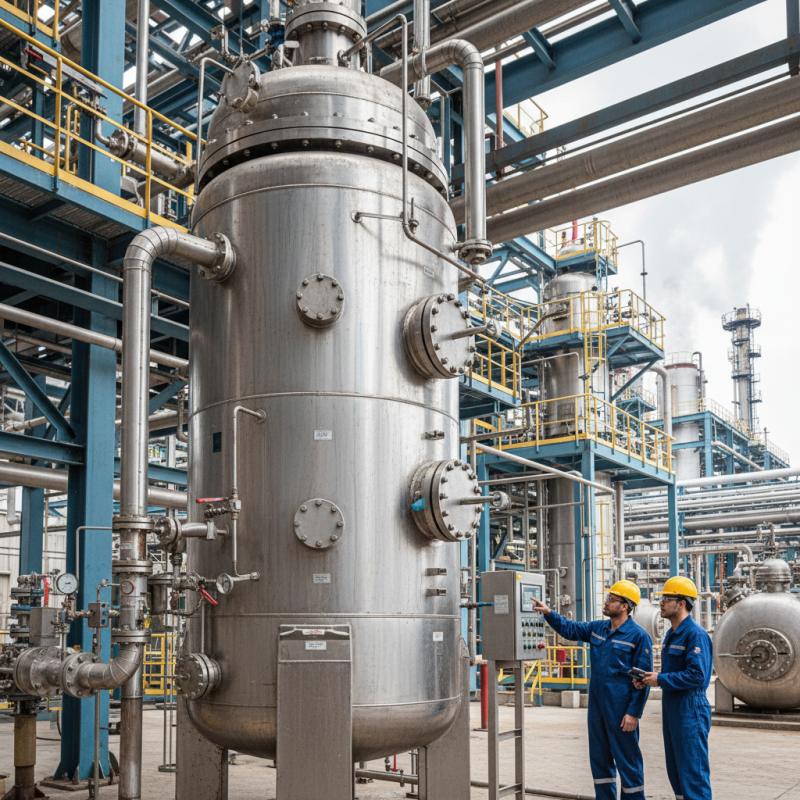
The ASME Reactor plays a critical role in various industrial sectors. This equipment ensures safe and efficient processing of chemical reactions. Understanding the ASME Reactor is essential for engineers and industry professionals.
Designed under the strict standards of the American Society of Mechanical Engineers, ASME Reactors guarantee reliability. They undergo rigorous inspections and testing. These measures enhance safety, but flaws can still occur. Regular maintenance is vital.
The versatility of the ASME Reactor makes it suitable for many applications. However, improper usage may lead to significant issues. Addressing these challenges requires ongoing education and adaptation. Industry players must constantly refine practices to maximize efficiency and safety.
What is an ASME Reactor and Its Fundamental Definition?
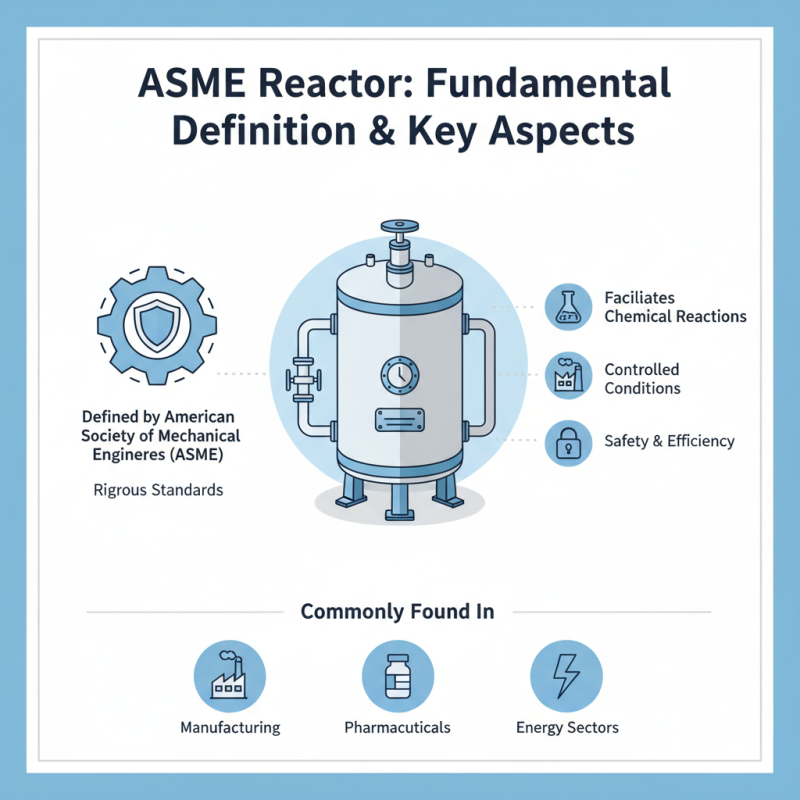
An ASME reactor is a critical component in various industries, defined by the American Society of Mechanical Engineers (ASME). These reactors are designed to facilitate chemical reactions under controlled conditions. Commonly found in manufacturing, pharmaceuticals, and energy sectors, ASME reactors ensure safety and efficiency in operations. Their construction adheres to rigorous standards, promoting reliability and performance.
The fundamental design of an ASME reactor includes several key elements. It often features pressure vessels that can withstand high temperatures and pressures. The materials used are chosen for durability. Furthermore, safety valves and gauges are installed to monitor conditions. However, even strict regulations do not eliminate risks entirely. Design flaws can happen, and operational mishaps may still occur, requiring constant vigilance and improvement.
Working with ASME reactors involves immense responsibility. Operators must be well-trained and knowledgeable. Regular maintenance and inspections are essential to avoid failures. Yet, the complexity of chemical processes can lead to unforeseen challenges. Continuous learning from past incidents can enhance future designs. Understanding these nuances is vital for professionals in the field.
The Importance of ASME Standards in Reactor Design and Safety
ASME standards play a vital role in reactor design and safety. These standards ensure that reactors operate at high efficiency. They address materials, design principles, and testing methods. The guidelines set by ASME help engineers create safe and reliable reactors. Without these standards, the potential for catastrophic failures increases significantly.
In many industrial sectors, adherence to ASME standards is non-negotiable. They establish benchmarks for safety and performance. Each reactor must withstand extreme conditions, from high pressure to temperature fluctuations. Engineers must continually evaluate and enhance these designs. This ongoing process highlights the importance of experience and knowledge in building safer reactors.
Sometimes, manufacturers may cut corners to reduce costs. This can lead to mistakes or safety oversights. It's essential for the industry to reflect on these practices and prioritize safety over profit margins. A culture of compliance with ASME standards can drive innovation and prevent disasters. Fostering a commitment to these principles ensures a safer future for all stakeholders involved.
ASME Reactor Design Safety Standards
This bar chart illustrates the importance of various ASME standards in reactor design and safety, highlighting key areas such as Material Selection, Pressure Design, and Safety Analysis.
Key Applications of ASME Reactors in Chemical and Nuclear Industries
ASME reactors play a vital role in various industries, particularly in chemicals and nuclear sectors. Their design ensures robust operation under high pressure and temperature. According to a report by the American Institute of Chemical Engineers, nearly 40% of chemical processes utilize ASME-compliant reactors. This compliance guarantees safety and efficiency, crucial in industries where precision is non-negotiable.
In the nuclear industry, ASME reactors are essential for maintaining safety standards. These reactors are built to handle radioactive materials safely. The Nuclear Regulatory Commission emphasizes that about 80% of operational reactors need strict adherence to ASME standards. This ensures containment and minimal environmental impact, crucial for public safety. The design's complexity can sometimes lead to challenges, with a notable percentage facing operational inefficiencies. Continuous improvement and rigorous testing are necessary for optimal performance.
ASME reactors also find applications in pharmaceuticals, refining, and food production. In pharmaceuticals, for instance, the precision of an ASME reactor can enhance the yield of drug formulations. However, this precision is not always guaranteed, and variations in raw materials can affect outcomes. This highlights the need for constant monitoring and adjustment throughout production processes.
Performance Metrics: Efficiency and Safety Data of ASME Reactors
ASME reactors play a crucial role in various industries by ensuring safe and efficient processing. These reactors are designed to adhere to strict performance metrics, notably energy efficiency and safety. High efficiency can lead to reduced operational costs, which is vital for competitive industries. Many facilities constantly evaluate their energy consumption and strive for improvements.
Safety data is a paramount consideration in reactor design and operation. Although ASME standards promote high safety levels, incidents can still occur. Regular inspections and maintenance are essential to mitigate risks. Addressing flaws or weak points in reactor operations is necessary. Continuous monitoring helps improve safety outcomes and build trust in these systems.
While ASME reactors excel in many areas, challenges remain. Some reactors struggle with achieving optimal efficiency under varying conditions. Operational data may show inconsistencies, prompting a need for better technology or processes. Understanding these challenges fosters innovation, pushing for advancements in reactor performance and reliability.
What is ASME Reactor and Its Role in Industry?
| Performance Metric |
Description |
Efficiency (%) |
Safety Rating |
| Thermal Efficiency |
Ratio of useful thermal energy output compared to energy input. |
89% |
High |
| Chemical Yield |
Amount of desired product produced from total reactants. |
95% |
Moderate |
| Energy Consumption |
Total energy used during the reactor's operation. |
150 kWh |
N/A |
| Downtime |
Time the reactor is not operational due to maintenance or failures. |
10% |
Low |
| Incident Rate |
Frequency of safety incidents occurring in the reactor. |
1 per year |
Excellent |
Future Trends in ASME Reactor Technology and Industry Adoption
The future of ASME reactor technology is poised for significant evolution. Advances in materials science enhance reactor durability and safety. Reports indicate a 30% increase in efficiency for next-generation reactors. These improvements respond to the industry's call for better performance under extreme conditions.
Adoption trends show a growing interest in modular and small-scale reactors. According to recent findings, the global market for ASME reactors is expected to grow by 12% annually. This shift reflects a commitment to sustainability and reducing carbon footprints. Innovative designs are making reactors more accessible to smaller operations.
However, challenges remain. Some manufacturers struggle with regulatory compliance. The need for ongoing training in new technologies is pressing. As the industry evolves, addressing these issues is crucial for successful implementation. Stakeholders must remain adaptable and responsive to ensure a secure and efficient future for ASME reactors.