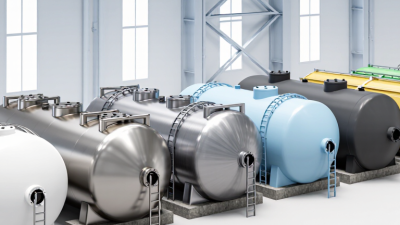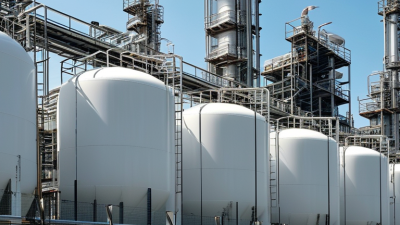
Choosing the right Chemical Storage Tank is a practical decision, not merely a purchasing exercise. It affects product integrity, worker safety, maintenance costs, and daily operational control. A suitable tank keeps chemicals stable during storage. It also reduces exposure risks, leakage concerns, and unnecessary production interruptions.
Trevor Kletz, a respected process-safety expert, once warned, “If you think safety is expensive, try ignorance.” His statement remains relevant when businesses compare tank materials, capacities, fittings, and containment systems. Compatibility matters. A tank designed for water may fail with aggressive acids, solvents, or oxidizing chemicals. Temperature changes can also influence pressure, brittleness, and chemical performance. Reviewing safety data sheets, manufacturer specifications, and site conditions helps create a more defensible selection process.
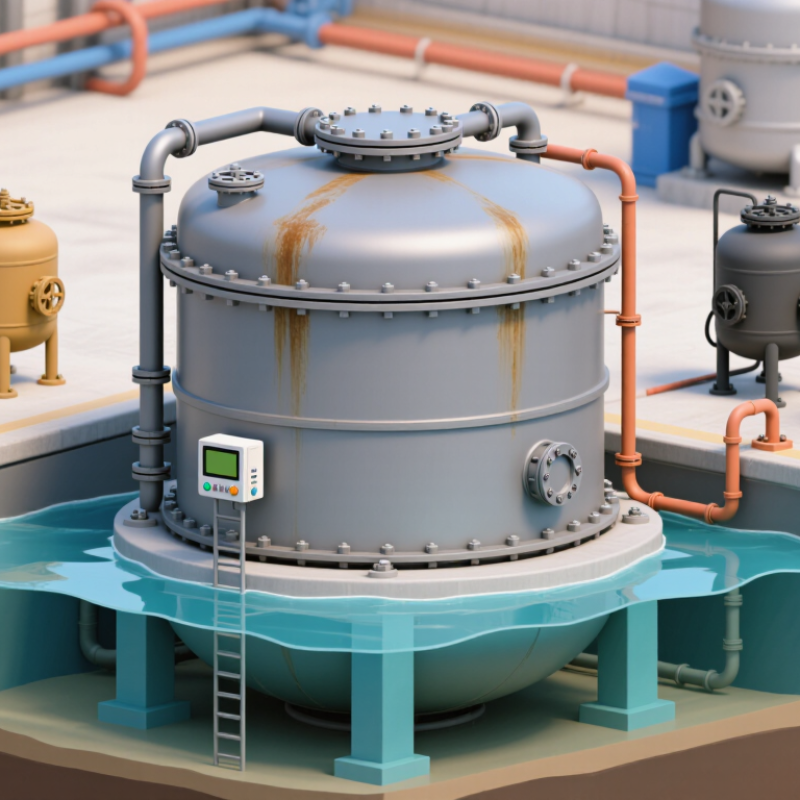
Look closely at the details. A well-chosen Chemical Storage Tank may include corrosion-resistant construction, secondary containment, secure connections, level monitoring, and accessible inspection points. These features support safer routines and more predictable maintenance. However, no tank eliminates every risk. Poor installation, overfilling, neglected inspections, or unsuitable cleaning can still cause serious problems. That is where experience matters. Operators should document inspections, train personnel, and reassess the system when chemicals or production volumes change. The ideal choice is not always the largest or cheapest tank. It is the one that matches the chemical, environment, workflow, and responsible operating practices. Some assumptions may prove wrong. Reviewing them regularly is wise.
Why Choose a Chemical Storage Tank for Your Business?
Chemical storage tanks are designed to hold liquids safely before processing, use, or disposal. Their purpose extends beyond simple containment. A suitable tank helps control leaks, evaporation, contamination, and material degradation. Common types include polyethylene, fiberglass-reinforced plastic, carbon steel, stainless steel, double-wall, vertical, and horizontal tanks. The correct choice depends on chemical compatibility, temperature, concentration, volume, and site conditions. A tank may look strong, yet still fail when exposed to an incompatible chemical.
Core industry standards usually address materials, design pressure, ventilation, labeling, secondary containment, inspection, and emergency access. Requirements vary by region and chemical classification. Businesses should review applicable fire, building, environmental, and occupational-safety rules with qualified professionals. Manufacturer data matters, but it is not enough alone. A written compatibility review and documented inspection schedule provide stronger evidence of responsible planning. No universal tank exists.
Tips: Confirm the chemical’s concentration and operating temperature. Check fittings, gaskets, valves, and vents as carefully as the tank shell. Keep spill-control materials nearby, and record every inspection. Consider a double-wall design where a hidden leak could reach soil or drains. Also, avoid choosing the cheapest option too quickly. Initial savings can become expensive after corrosion, downtime, or cleanup. One practical weakness deserves attention: maintenance plans often look complete on paper but fail during busy shifts. Train operators with clear labels and short, repeatable procedures.
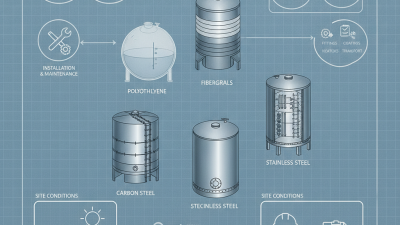
Choosing a chemical storage tank starts with chemistry, not price. HDPE resists many acids, alkalis, and salts while remaining lightweight and easy to install. It can, however, soften under heat or stress. FRP offers strong corrosion resistance with better stiffness, especially when the resin and laminate match the chemical. Steel provides mechanical strength and temperature tolerance, but its lining, welds, and corrosion allowance require careful control. No material wins every service.
ASTM standards help define resin performance, plastic fabrication, laminate testing, steel properties, and inspection methods. API standards may guide design, welding, inspection, and atmospheric storage practices when their scope fits the tank. They are not interchangeable checkboxes. Confirm the exact edition, tank geometry, pressure rating, and service conditions with a qualified engineer. Review concentration, temperature cycles, density, filling speed, sunlight, venting, and secondary containment. Small omissions become expensive leaks.
In field reviews, a tank may look sound while its nozzle shows stress whitening, a brittle FRP fitting, or blistered lining. Those clues deserve action. Request compatibility data, batch traceability, hydrostatic testing, and documented inspections. For HDPE, check wall thickness and support spacing. For FRP, verify resin barriers and laminate orientation. For steel, inspect weld quality and coating adhesion. Compatibility charts are useful, but not definitive. Real mixtures age differently. Ask for operating history, not only laboratory tables.
| Evaluation Dimension | HDPE High-Density Polyethylene | FRP Fiberglass-Reinforced Plastic | Steel Carbon or Stainless Steel |
|---|---|---|---|
| Typical Chemical-Service Strength | Strong resistance to many acids, alkalis, salts, and aqueous chemicals. Suitability depends on concentration, temperature, exposure time, and tank design. | Broad chemical resistance can be achieved by selecting a compatible resin, liner, and reinforcement system. Resin selection is critical for oxidizers, solvents, and elevated temperatures. | Carbon steel is suitable for many oils, fuels, and non-corrosive liquids but can require coatings or corrosion allowance for aggressive chemicals. Stainless steel generally provides better corrosion resistance than carbon steel, subject to chemical compatibility. |
| Common Operating Temperature Consideration | Generally preferred for ambient or moderately warm service. Continuous temperature limits are application-specific and decrease when the tank is under mechanical or vacuum stress. | Often suitable for higher-temperature service than standard HDPE, but the allowable temperature is governed by resin chemistry, laminate construction, loads, and chemical exposure. | Usually the preferred option for high-temperature service because mechanical strength is retained over a wider temperature range. Design temperature and material grade must be specified. |
| Mechanical Strength and Rigidity | Lightweight and impact-resistant, but relatively flexible. Large tanks may require properly designed supports, stiffening, anchoring, and hydrostatic-load control. | High strength-to-weight ratio and good structural rigidity. Tank performance depends on laminate thickness, fiber orientation, joints, supports, and fabrication quality. | High stiffness and structural strength. Suitable for large tanks and demanding loads, although wall thickness, corrosion allowance, weld design, and foundation loads must be engineered. |
| Corrosion and Permeation | Does not rust and offers good resistance to many water-based chemicals. Some hydrocarbons and solvents may permeate, swell, soften, or stress-crack the material. | Does not rust, but chemical attack can affect the resin or liner. Permeation, blistering, and resin degradation must be evaluated for the specific chemical. | Carbon steel can corrode rapidly in many chemical environments. Protective linings, coatings, cathodic protection, corrosion allowance, or stainless alloys may be required. |
| Weight and Installation | Lightweight and typically easier to transport and install. Lifting, anchoring, and foundation requirements still need to account for a full tank and wind or seismic loads. | Lower weight than steel for comparable capacity and easier handling in many installations. Field joints and access limitations may affect installation planning. | Heavier and commonly requires substantial lifting equipment, foundations, and field erection. Its weight can improve stability but increases logistics and installation cost. |
| Fabrication and Joining | Commonly manufactured by rotational molding or fabricated by thermoplastic welding. Weld quality, fittings, nozzles, and stress-relief details are important. | Manufactured using resin and glass reinforcement systems, often by filament winding, contact molding, or other qualified processes. Laminate quality and curing control are essential. | Fabricated by welding, bolting, or shop-built construction. Weld procedure qualification, inspection, coating, and corrosion-control measures are key considerations. |
| Relevant ASTM Reference | ASTM D1998 provides requirements for rotationally molded polyethylene tanks used for aboveground chemical liquids. Additional design, installation, and chemical-compatibility requirements may apply. | ASTM D3299 covers filament-wound glass-fiber-reinforced thermoset resin chemical-resistant tanks. Other FRP standards may apply depending on tank type, construction, and service conditions. | Relevant ASTM material specifications may include ASTM A36 for structural carbon steel, ASTM A240 for corrosion-resistant steel plate, and other product-specific material standards. The applicable specification depends on the selected alloy and tank design. |
| Relevant API Reference | API 650 and API 620 are primarily written for welded steel storage tanks and are not general design standards for HDPE tanks. HDPE tanks should be designed and qualified under applicable thermoplastic standards and project specifications. | API 650 and API 620 are primarily written for welded steel storage tanks and are not general design standards for FRP tanks. FRP construction should follow applicable FRP standards, engineering calculations, and project requirements. | API 650 is commonly used for welded aboveground atmospheric storage tanks. API 620 addresses large, welded, low-pressure storage tanks. The selected API standard must match the tank geometry, pressure, temperature, service, and jurisdiction. |
| Inspection and Maintenance | Inspect for cracking, deformation, stress cracking, UV exposure, fitting damage, and leakage. Avoid unapproved solvents and incompatible cleaning methods. | Inspect for cracks, blisters, delamination, fiber exposure, liner damage, resin degradation, and nozzle or support problems. | Inspect for corrosion, coating breakdown, weld defects, settlement, leakage, and structural distortion. Inspection intervals and methods should follow the applicable code and risk assessment. |
| Best-Fit Applications | Water-treatment chemicals, acids, alkalis, salts, and many ambient-temperature aqueous services where lightweight construction and corrosion resistance are priorities. | Corrosive chemical storage, process vessels, scrubber systems, and applications requiring a balance of corrosion resistance, rigidity, and moderate weight. | Large-volume storage, fuels and oils, high-temperature liquids, applications requiring high rigidity, or projects governed by welded steel tank codes. |
| Primary Selection Risk | Choosing HDPE without checking temperature, chemical concentration, permeation, vacuum conditions, or long-term creep behavior. | Choosing the wrong resin or laminate system for the chemical, temperature, concentration, or cyclic loading conditions. | Underestimating corrosion, coating failure, weld quality, inspection, foundation, or maintenance requirements. |
| Overall Selection Profile | Best when: low weight, corrosion resistance, and cost-effective storage of compatible chemicals are priorities at suitable temperatures and pressures. | Best when: broad chemical resistance and structural rigidity are needed, with engineering control over resin, laminate, liner, and fabrication quality. | Best when: large capacity, high rigidity, higher-temperature service, or API-governed welded-tank construction is required. |
Choosing a chemical storage tank starts with capacity, not appearance. For oil-containing materials, EPA’s SPCC rule uses a clear planning threshold: more than 1,320 gallons of aggregate aboveground storage. Completely buried storage has a separate 42,000-gallon threshold. These figures appear in 40 CFR §112.1 and EPA’s SPCC Guidance for Regional Inspectors. The rule applies when a facility could reasonably discharge oil into navigable waters or adjoining shorelines.
Count every qualifying container. Include tanks, drums, totes, and operational vessels. A 1,000-gallon tank plus four 100-gallon drums equals 1,400 gallons. That small difference can change your planning obligations. EPA guidance also expects appropriate secondary containment, inspection routines, and drainage controls. Capacity should therefore reflect maximum possible inventory, not a typical weekly level. A spreadsheet can still mislead.
Professional planning should document tank volume, fluid type, location, wall construction, and containment capacity. Review the inventory during seasonal production changes. Do not treat the 1,320-gallon figure as a universal chemical-storage limit; it specifically concerns oil under SPCC. The EPA’s SPCC framework is the authority, while facility engineering records provide practical evidence. Consult a qualified environmental or storage engineer when classifications remain uncertain. The safer design may cost more initially. That trade-off deserves a written assessment.
Why Choose a Chemical Storage Tank for Your Business?
Containment design deserves more attention than tank capacity. The common 110% benchmark means secondary containment should hold 110% of the largest vessel’s volume. For a 10,000-liter tank, that equals 11,000 liters before considering rainwater or firefighting runoff. The U.S. EPA’s SPCC guidance uses a different principle: containment must hold the largest single tank, plus adequate freeboard for precipitation. This difference matters. A fixed 110% rule may be insufficient outdoors.
Site conditions change the calculation. A sloped concrete pad can direct a leak toward a drain within minutes. A low curb may look adequate, yet lose capacity when rainwater fills the basin. NFPA 30 guidance also emphasizes compatible construction, protected locations, and control of spill movement. These details affect actual performance, not just drawings.
Experienced operators should verify tank volume, rainfall records, drainage paths, and chemical compatibility. Local fire codes may require more than the 110% benchmark. That is easy to miss. A 2023 industrial safety review by the U.S. Chemical Safety and Hazard Investigation Board found that weak containment planning can worsen release consequences, especially when safeguards depend on manual response. The 110% figure is useful, but it is not a universal answer. Recheck it after every tank expansion, process change, or site relocation.
Containment Design: Evaluate the Common 110% Secondary-Containment Benchmark
Secondary containment sized at 110% of the largest tank’s nominal capacity provides an additional 10% volume allowance. The chart shows the calculated containment volume for representative tank capacities, using the formula: secondary containment = tank capacity × 1.10.
A chemical storage tank can reduce handling steps and improve inventory control. Yet fire safety must guide every design decision. NFPA 30, Flammable and Combustible Liquids Code, addresses liquid classification, tank construction, separation, ventilation, spill control, and ignition-source management.
These details matter because NFPA reported an annual average of 37,910 industrial and manufacturing structure fires from 2017 to 2021. The same report recorded about 16 civilian deaths, 273 injuries, and $1.5 billion in direct property damage each year.
Select a tank according to the liquid’s flash point, compatibility, volume, and installation location. Provide secondary containment, clear labeling, bonding, grounding, and controlled access. Keep heat sources away. Maintain suitable ventilation and emergency shutdown controls.
NFPA 30 requirements can differ between indoor tanks, outdoor tanks, portable containers, and process systems. A common mistake is treating one checklist as universal. It is not.
Confirm the latest edition, local fire-code amendments, and site-specific hazards with a qualified fire-protection professional. OSHA 1910.106 may also apply to workplace flammable-liquid storage.
Tips:
Inspect valves, vents, grounding connections, and containment areas on a defined schedule. Record findings with dates and photographs. Train workers before assigning transfer duties. Keep absorbent materials and suitable extinguishing equipment accessible. Do not store incompatible chemicals together, even when containers appear sealed. A clean tank room can still hide a serious ventilation problem.